
GLOBAL SELLING BLOG
What is a switch bill of lading: Guide to its meaning and uses
A switch bill of lading is a type of bill of lading issued in substitution for the original bill. In this blog, learn about its benefits, usage, and format.

A Bill of Lading is issued by the carrier company to the shipper, which acts as proof of contract for the goods being shipped. The shipper then transfers the bill to a consignee after receiving the final payment. The consignee is only allowed to take delivery of the cargo after presenting the original Bill of Lading to the carrier. A Switch Bill of Lading is basically a second set of Bill of Lading, issued in substitution for the original bill for any changes to be made during any stage of the shipment.
What is a switch bill of lading?
Switch Bills are used to replace the shipper and consignee details from the original Bill of Lading. It is issued to replace the original Bill of Lading that is given at the time of shipment. Sometimes, there are a few changes in the deal or conditions, which are updated in the Switch Bill of Lading1.
Why is a switch bill of lading issued?
When switch bills are issued, the first set should be given to the carrier in exchange for the new one. Some of the reasons to issue a switch bill are2:
• If the cargo’s destination needs to be changed to another port, a switch bill of lading is issued as the original bill.
• Any custom authority or the buyer or consignee can request the cargo description to be modified or edited at the final destination.
• The customer or importer prefers to have only one Bill of Lading covering all the details because earlier the goods were shipped in small parcels on separate bills.
• If the cargo’s destination needs to be changed to another port, a switch bill of lading is issued as the original bill.
• Any custom authority or the buyer or consignee can request the cargo description to be modified or edited at the final destination.
• The customer or importer prefers to have only one Bill of Lading covering all the details because earlier the goods were shipped in small parcels on separate bills.
How does a switch bill of lading work?
The switch bill can only be issued in the place of the original bill of lading. However, a switch bill of lading is different from the original bill of lading but has a few similar uses:
• Acts as the receipt of goods.
• Acts as a valid contact between the shipper and the bearer of the shipment.
• Lists details of the goods.
It is an important document when goods are being shipped across international borders. It consists of all the information about the cargo being transported and thus, it is critical in terms of transparency and adhering to laws between two or more countries.
• Acts as the receipt of goods.
• Acts as a valid contact between the shipper and the bearer of the shipment.
• Lists details of the goods.
It is an important document when goods are being shipped across international borders. It consists of all the information about the cargo being transported and thus, it is critical in terms of transparency and adhering to laws between two or more countries.
Process to issue a switch bill of lading
Step 1
A switch bill of lading is requested by the cargo owner.
Step 2
It then needs to be approved by the carrier and freight forwarder. The latter must compare the differences between the original bill of lading and proposed switch bill of lading.
Step 3
Once the switch bill of lading has been approved for issuance, the carrier and freight forwarder cancel original sets of BoLs before releasing the new switch bill of lading.
Contents in a switch bill of lading
Below are some of the components included in a switch bill of lading are:
• Details of the exporter and the importer
• Booking number and Master Bill of Lading number and its issue date
• NRA (Negotiable Rate Arrangement) number, which is a document exchanged between the shipping and the Non-Vessel Operating Common Carrier (NVOCC) to ensure that all the rates are regulated and accepted before shipping
• Details of the place of pickup and delivery
• Details of the port of loading and unloading
• Vessel and voyage details
• Details of the exporter and the importer
• Booking number and Master Bill of Lading number and its issue date
• NRA (Negotiable Rate Arrangement) number, which is a document exchanged between the shipping and the Non-Vessel Operating Common Carrier (NVOCC) to ensure that all the rates are regulated and accepted before shipping
• Details of the place of pickup and delivery
• Details of the port of loading and unloading
• Vessel and voyage details
Features of a switch bill of lading
Some of the features of a switch bill of lading are3:
• A new set of Bill of Lading is issued in the form of a Switch Bill of Lading when a seller of the goods does not want the name of the original shipper to appear on the bill.
• The original bills are held in the country of shipment.
• A new set of Bill of Lading is issued in the form of a Switch Bill of Lading when a seller of the goods does not want the name of the original shipper to appear on the bill.
• The original bills are held in the country of shipment.
Details that can be changed in a switch bill of lading
The shipper, consignee, and notification information can be permitted to be changed in a switch bill of lading. If the new information is accurate and factual and has no impact on transportation and delivery, additional elements/information indicated below can also be altered4:
• Products as described by the shipper
• Ship’s name (if relevant)
• Location and date of issuing (if different from those of shipment)
• Shipment and discharge port
• Products as described by the shipper
• Ship’s name (if relevant)
• Location and date of issuing (if different from those of shipment)
• Shipment and discharge port
Details that cannot be changed in the switch bill of lading
• Site and date of shipment, as altering these could have an impact on the conditions of delivery according to the sales contract information of the cargo, including the quantity, size, weight, and measurement of the parcels.
• If there is any information regarding hazardous cargo and in that case keep in mind that the cargo is already on board based on the original hazardous cargo declaration.
• Reefer cargo information, such as temperature and humidity settings, etc.; note that the cargo is already on board based on the original cargo declaration.
• Information regarding OOG Cargo, if any, and keep in mind that cargo is already on board based on the initial OOG details stated, including lost slots computation, etc.
• Original clauses on the bill of lading.
• If there is any information regarding hazardous cargo and in that case keep in mind that the cargo is already on board based on the original hazardous cargo declaration.
• Reefer cargo information, such as temperature and humidity settings, etc.; note that the cargo is already on board based on the original cargo declaration.
• Information regarding OOG Cargo, if any, and keep in mind that cargo is already on board based on the initial OOG details stated, including lost slots computation, etc.
• Original clauses on the bill of lading.
What are the benefits and risks associated with a switch bill of lading?
Benefits of a switch bill of lading:
• An exporter can use a Switch Bill of Lading to receive payment from the importer before paying the shipper or the original manufacturer of the goods.
• The custom authorities or the buyer at the final destination request the cargo description to be modified.
• The custom authorities or the buyer at the final destination request the cargo description to be modified.
Risks of a switch bill of lading:
• Different versions of Bill of Lading can present a risk of the carrier delivering goods to the wrong person.
• Creating inaccurate details like shipment date, shipper or consignee name, quantity etc.
• Changes and impact on jurisdiction clause or different freight rates.
• Switch Bill of Lading may be used to draw fraudulently on a letter of credit or to defraud a seller/buyer.
• Creating inaccurate details like shipment date, shipper or consignee name, quantity etc.
• Changes and impact on jurisdiction clause or different freight rates.
• Switch Bill of Lading may be used to draw fraudulently on a letter of credit or to defraud a seller/buyer.
Tips to handle a switch bill of lading
A few suggestions to handle a switch BoL are:
• Trustworthiness of the major party authorizing the issuing of the second set should be confirmed by goods forwarders. Obtain their written consent along with a letter of indemnification (countersigned by a bank if the agent determines it is necessary) holding the cargo agent harmless from any repercussions of issuing the additional set of bills of lading.
• The need for written consent from any additional parties who may be impacted by the freight forwarder's action, such as the ship owner, shipper, or bank, should be taken into consideration by freight forwarders as well. The ship owner must provide written consent before a goods forwarder can act on behalf of the carrier if the charterer has given them permission. If this is not done, the ship owner will have a strong case against the agent for any losses brought on by the unauthorized issuing of the second set.
• The agent should obtain the correct wording from the principal and obtain the primary party’s approval of the completed indemnity before issuing the switch bill if the principal party has asked them to do so based on a customer indemnity.
• It’s also a good idea to make sure the freight agent has their own insurance that covers the issuance of switch bills. They must tell their insurance provider the precise justification behind the switch bill of lading’s issuance.
• Trustworthiness of the major party authorizing the issuing of the second set should be confirmed by goods forwarders. Obtain their written consent along with a letter of indemnification (countersigned by a bank if the agent determines it is necessary) holding the cargo agent harmless from any repercussions of issuing the additional set of bills of lading.
• The need for written consent from any additional parties who may be impacted by the freight forwarder's action, such as the ship owner, shipper, or bank, should be taken into consideration by freight forwarders as well. The ship owner must provide written consent before a goods forwarder can act on behalf of the carrier if the charterer has given them permission. If this is not done, the ship owner will have a strong case against the agent for any losses brought on by the unauthorized issuing of the second set.
• The agent should obtain the correct wording from the principal and obtain the primary party’s approval of the completed indemnity before issuing the switch bill if the principal party has asked them to do so based on a customer indemnity.
• It’s also a good idea to make sure the freight agent has their own insurance that covers the issuance of switch bills. They must tell their insurance provider the precise justification behind the switch bill of lading’s issuance.
Easy e-commerce exports with Amazon
Global Selling
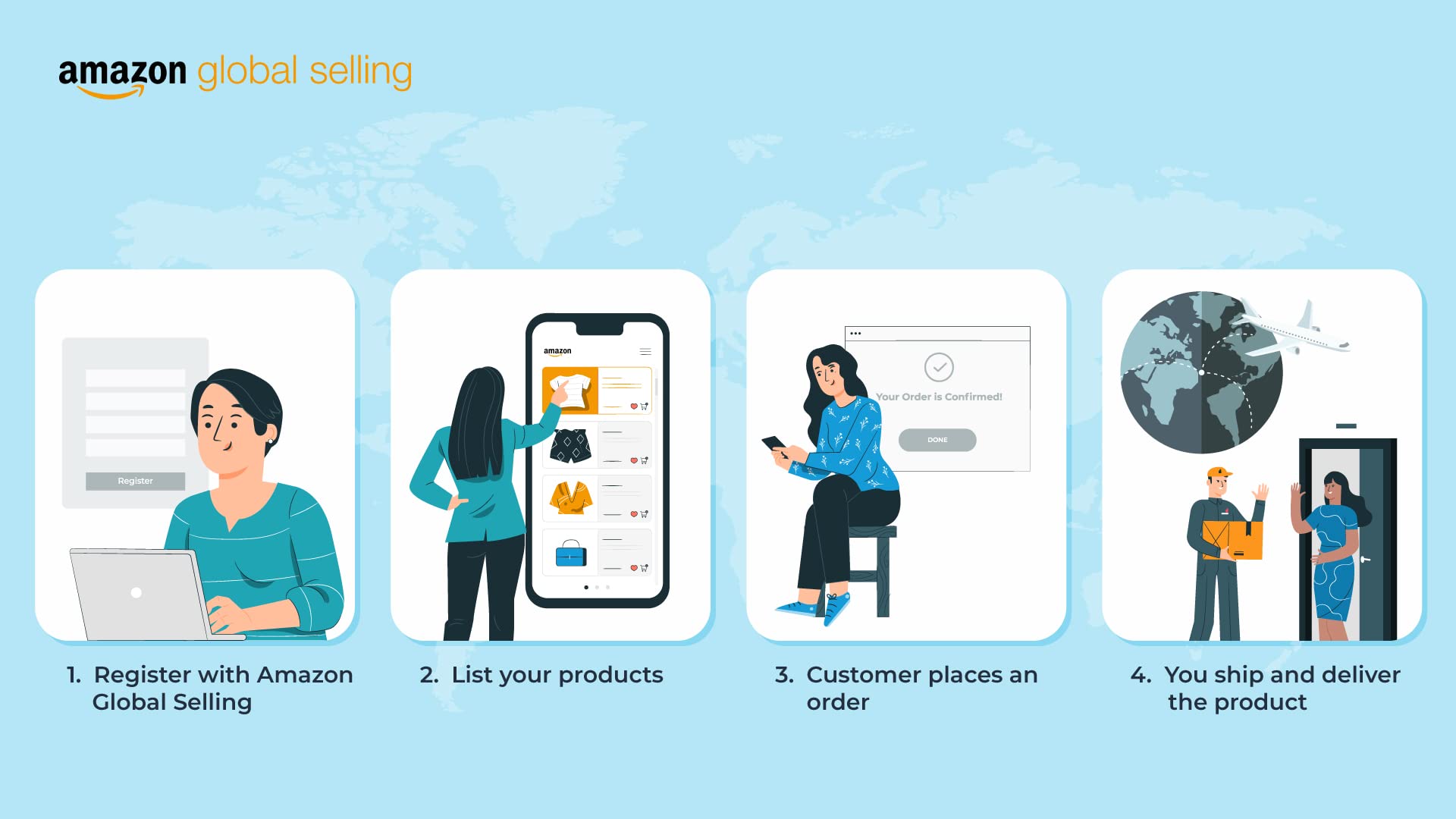
As an e-commerce exports program, Amazon Global Selling enables Indian sellers and MSMEs to take their products from India to 18+ Amazon global marketplaces. Without having to set up a physical store or warehouse abroad, Amazon’s simple registration process and hassle-free logistic support helps you reach global customers in a seamless manner.
More blogs on bill of lading
Frequently Asked Questions
Who issues a Switch Bill of Lading?
A Switch Bill of Lading can be issued only if requested by the cargo owner. Only the party that has complete set of documents can ask for a Switch Bill of Lading as this bill represents ownership. After the request has been made, only the freight forwarder or carrier can approve the request.
Can a switch bill of lading be revised?
During the export logistic process, a few changes in shipment details or cargo details can be expected. A bill of lading can be revised accordingly.
Where can a bill of lading be switched?
A bill of lading may be moved anywhere in the world for goods from anywhere to any place, depending on the shipping line and its coverage. For instance, if a shipment is going from Delhi to Amsterdam, the bill of lading can be switched in London, as long as the shipping line has an office in London. The switching of the bill of lading is not dependent on the route of the cargo.
Published on August 29, 2022.
Sources:
1. https://www.itic-insure.com/fileadmin/uploads/itic/Documents/BOL/Issuance%20Switch%20Bill%20of%20Lading.pdf
2. https://shippingandfreightresource.com/wp-content/uploads/wp-post-to-pdf-cache/1/what-is-a-switch-bill-of-lading-and-when-and-why-is-it-used.pdf
3. https://www.icontainers.com/us/2018/11/01/switch-bill-of-lading-complete-manual/
4. https://www.shippingandfreightresource.com/what-is-a-switch-bill-of-lading-and-when-and-why-is-it-used/
5. https://law.nus.edu.sg/wp-content/uploads/2020/04/011_2019_Miriam-Goldby.pdf
6. https://www.icontainers.com/us/2018/11/01/switch-bill-of-lading-complete-manual/
7. https://nacin.gov.in/resources/file/e-books/Bill%20of%20lading.pdf
Sources:
1. https://www.itic-insure.com/fileadmin/uploads/itic/Documents/BOL/Issuance%20Switch%20Bill%20of%20Lading.pdf
2. https://shippingandfreightresource.com/wp-content/uploads/wp-post-to-pdf-cache/1/what-is-a-switch-bill-of-lading-and-when-and-why-is-it-used.pdf
3. https://www.icontainers.com/us/2018/11/01/switch-bill-of-lading-complete-manual/
4. https://www.shippingandfreightresource.com/what-is-a-switch-bill-of-lading-and-when-and-why-is-it-used/
5. https://law.nus.edu.sg/wp-content/uploads/2020/04/011_2019_Miriam-Goldby.pdf
6. https://www.icontainers.com/us/2018/11/01/switch-bill-of-lading-complete-manual/
7. https://nacin.gov.in/resources/file/e-books/Bill%20of%20lading.pdf

Sell across the world with Amazon Global Selling
Ready to start exporting from India?
Want to learn about Amazon Global Selling?
Disclaimer: Whilst Amazon Seller Services Private Limited ("Amazon") has used reasonable endeavours in compiling the information provided, Amazon provides no assurance as to its accuracy, completeness or usefulness or that such information is error-free. In certain cases, the blog is provided by a third-party seller and is made available on an "as-is" basis. Amazon hereby disclaims any and all liability and assumes no responsibility whatsoever for consequences resulting from use of such information. Information provided may be changed or updated at any time, without any prior notice. You agree to use the information, at your own risk and expressly waive any and all claims, rights of action and/or remedies (under law or otherwise) that you may have against Amazon arising out of or in connection with the use of such information. Any copying, redistribution or republication of the information, or any portion thereof, without prior written consent of Amazon is strictly prohibited.
*Map not to scale. The map has been used for design and representational purpose only, it does not depict the geographical boundaries of the country. These do not conform to the external boundaries of India recognized by the Survey of India.
*Map not to scale. The map has been used for design and representational purpose only, it does not depict the geographical boundaries of the country. These do not conform to the external boundaries of India recognized by the Survey of India.

Get started with $50,000 in potential incentives.


© 2024 Amazon.com, Inc. or its affiliates. All rights reserved
