
GLOBAL SELLING BLOG
What is Let Export Order: Guide on how to obtain LEO in export trade
Let export order is a document that permits the clearance and loading of goods for export from India. Learn about importance of Let Export Order and how to obtain it.

Export procedures have been simplified with paperless transactions and easy online applications in the past few years. This has made obtaining licenses and documents easier, making export procedures hassle-free.
One of the key documents required before the shipment of goods is a Let Export Order. Once the goods are ready for export, an exporter is expected to arrange for customs clearance of the goods. This procedure starts with the submission of the shipping bill along with other documents. In the next stage, the customs officer checks the paperwork, assesses the value of goods, completes the inspection, and issues the Let Export Order to the exporter.
One of the key documents required before the shipment of goods is a Let Export Order. Once the goods are ready for export, an exporter is expected to arrange for customs clearance of the goods. This procedure starts with the submission of the shipping bill along with other documents. In the next stage, the customs officer checks the paperwork, assesses the value of goods, completes the inspection, and issues the Let Export Order to the exporter.
What is a Let Export Order (LEO)?
A Let Export Order is an important document that is presented in the final step within compliance authorized by the designated customs officer when exporting goods from India. It can be obtained from the customs department after completing a set of formalities including inspection and verification .
Once these formalities are completed, the customs Department passes the Let Export Order and hands it over to the exporter or the customs handling agent (CHA). An exporter doesn't necessarily need to appoint a CHA. They can also fulfill the formalities of the Customs Department and get Let Export Order. However, businesses hire clearing and forwarding agents to save time and effort in getting the paperwork in order1.
Once these formalities are completed, the customs Department passes the Let Export Order and hands it over to the exporter or the customs handling agent (CHA). An exporter doesn't necessarily need to appoint a CHA. They can also fulfill the formalities of the Customs Department and get Let Export Order. However, businesses hire clearing and forwarding agents to save time and effort in getting the paperwork in order1.
Who issues a Let Export Order?
The customs department is the government authority responsible for monitoring cargo moving in and out of India. Once an exporter or CHA completes the required legal export formalities, the customs department issues a LEO (Let Export Order) for the particular cargo.
How to obtain a Let Export Order?
An exporter can apply for and obtain a Let Export Order online. Below are the steps to obtain a LEO from the customs department2:
1. The exporter must prepare a commercial invoice and packing list and submit it with an SDF Declaration.
2. The respective CHA or exporter files shipping documents and shipping bills online on the customs portal – ICEGATE. The centralized customs software automatically generates the shipping bill .
3. Post this, cargo is moved to the location where it needs to be shipped from – this could be an airport, seaport or Container Freight Station (CFS).
4. Once the cargo is unloaded, exporter or CHA must register online for the inspection of goods.
5. A customs officer checks the goods and ensures that all formalities have been completed. Post this, an online inspection report is sent to authorities for approval. An appraiser checks the value of goods that are being exported.
6. After the inspection and valuation are completed, an online report is uploaded. Basis that, a Let Export Order is issued.
1. The exporter must prepare a commercial invoice and packing list and submit it with an SDF Declaration.
2. The respective CHA or exporter files shipping documents and shipping bills online on the customs portal – ICEGATE. The centralized customs software automatically generates the shipping bill .
3. Post this, cargo is moved to the location where it needs to be shipped from – this could be an airport, seaport or Container Freight Station (CFS).
4. Once the cargo is unloaded, exporter or CHA must register online for the inspection of goods.
5. A customs officer checks the goods and ensures that all formalities have been completed. Post this, an online inspection report is sent to authorities for approval. An appraiser checks the value of goods that are being exported.
6. After the inspection and valuation are completed, an online report is uploaded. Basis that, a Let Export Order is issued.
Points to note when applying for a LEO
• It is important for the exporter to obtain a Let Export Order before the shipping date.
• Whether you are applying on your own or through a CHA, the value of the goods being declared must match the actual value of the goods. If any deviation is noticed by the customs department, penalties will be issued. This might also delay the shipping process.
• Whether you are applying on your own or through a CHA, the value of the goods being declared must match the actual value of the goods. If any deviation is noticed by the customs department, penalties will be issued. This might also delay the shipping process.
To ensure a smooth passage, it is essential to keep your paperwork in order and make the right declarations ahead of the shipping date. With e-commerce exports, the process of selling internationally has become simpler with assistance at every step.
Easy e-commerce exports with Amazon
Global Selling
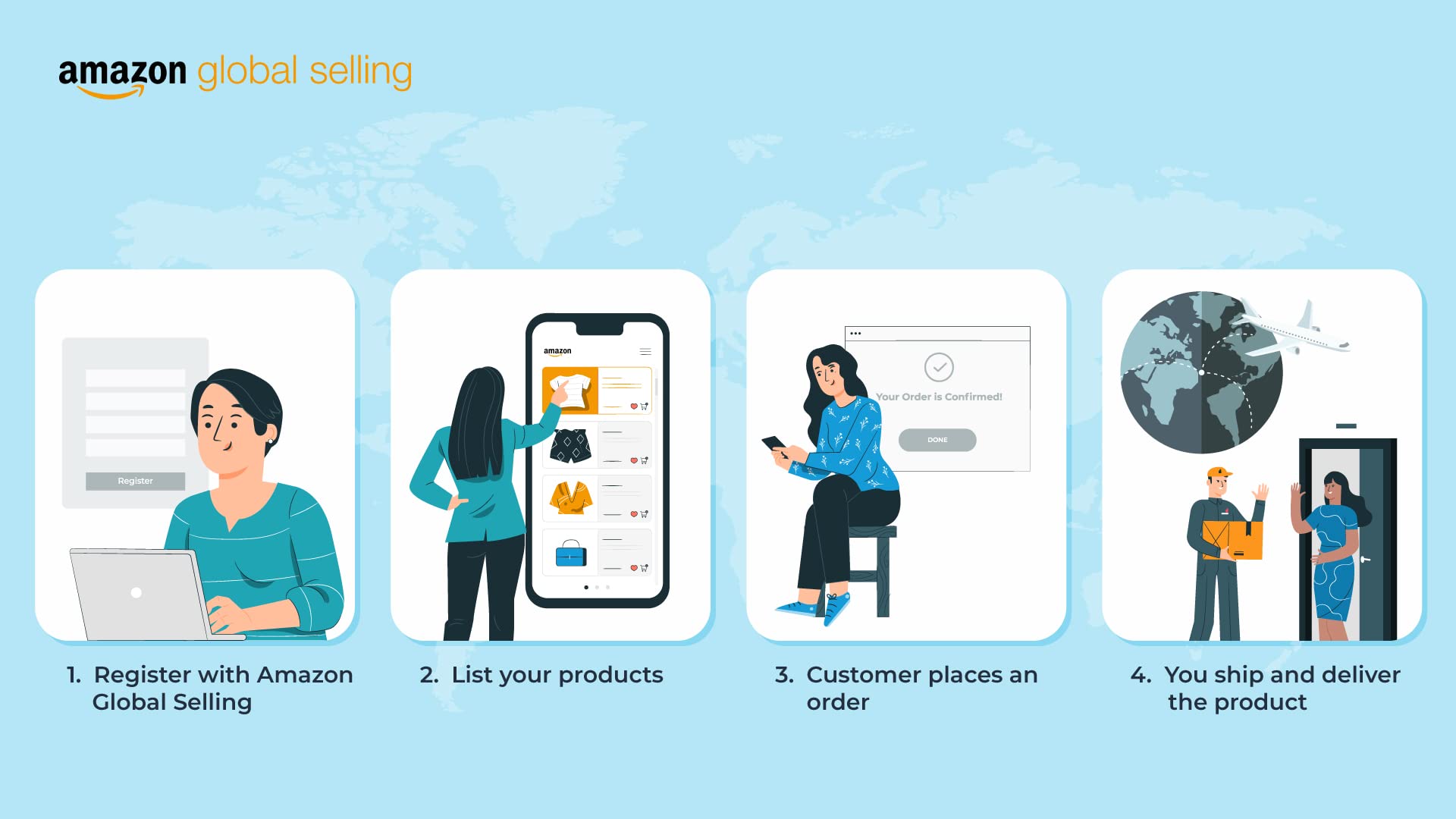
Amazon Global Selling – an e-commerce exports program, enables Indian exporters to export from India to 200+ countries and territories like USA, UK, France, Germany, Australia, Japan, UAE and more. Amazon provides support for export documentation, compliance, fulfillment, inventory management and listing in bulk. Whether you are a manufacturer, or seller, or reseller, or you have an emerging brand, you can export from India without setting up a store or warehouse abroad.
Frequently Asked Questions
What is LEO?
LEO stands for Let Export Order. It is the final compliance requirement for exporting goods from India.
How do I get a copy of my LEO?
You need to submit shipping bills to the customs department and request the physical inspection of goods. After the inspection is complete and the value of goods has been checked, customs issues a Let Export Order.
What is LEO in shipping?
LEO in shipping stands for LET Export Order. The customs department issues LEO after inspecting the quantity and value of goods being shipped, along with other mandatory paperwork.
Is LEO necessary for export?
Yes. LEO is necessary to export goods from India.
What is the full form of LEO in shipping?
LEO in shipping stands for Let Export Order.
Published on July 22, 2022.
Sources:
1. https://howtoexportimport.com/What-is-LET-EXPORT-order-in-export-trade--43.aspx
2. https://www.cbic.gov.in/resources/htdocs-cbec/customs/cs-circulars/cs-circulars-2020/Circular-No-30-2020.pdf
3. https://www.dripcapital.com/resources/blog/what-is-let-export-order
4. https://agriexchange.apeda.gov.in/Ready%20Reckoner/Procedure_for_Clearance.aspx
Sources:
1. https://howtoexportimport.com/What-is-LET-EXPORT-order-in-export-trade--43.aspx
2. https://www.cbic.gov.in/resources/htdocs-cbec/customs/cs-circulars/cs-circulars-2020/Circular-No-30-2020.pdf
3. https://www.dripcapital.com/resources/blog/what-is-let-export-order
4. https://agriexchange.apeda.gov.in/Ready%20Reckoner/Procedure_for_Clearance.aspx
Disclaimer: Whilst Amazon Seller Services Private Limited ("Amazon") has used reasonable endeavours in compiling the information provided, Amazon provides no assurance as to its accuracy, completeness or usefulness or that such information is error-free. In certain cases, the blog is provided by a third-party seller and is made available on an "as-is" basis. Amazon hereby disclaims any and all liability and assumes no responsibility whatsoever for consequences resulting from use of such information. Information provided may be changed or updated at any time, without any prior notice. You agree to use the information, at your own risk and expressly waive any and all claims, rights of action and/or remedies (under law or otherwise) that you may have against Amazon arising out of or in connection with the use of such information. Any copying, redistribution or republication of the information, or any portion thereof, without prior written consent of Amazon is strictly prohibited.
*Map not to scale. The map has been used for design and representational purpose only, it does not depict the geographical boundaries of the country. These do not conform to the external boundaries of India recognized by the Survey of India.
*Map not to scale. The map has been used for design and representational purpose only, it does not depict the geographical boundaries of the country. These do not conform to the external boundaries of India recognized by the Survey of India.
Related blogs
Success stories


Get started with $50,000 in potential incentives.


© 2024 Amazon.com, Inc. or its affiliates. All rights reserved
