
 Get $50,000 in potential benefits Register nowGet $50,000 in potential benefits Register now
GLOBAL SELLING BLOG
Export rice from India: A guide on how to export basmati rice from India
Learn how to start a rice export business from India easily with e-commerce and start selling your basmati rice products across the world.
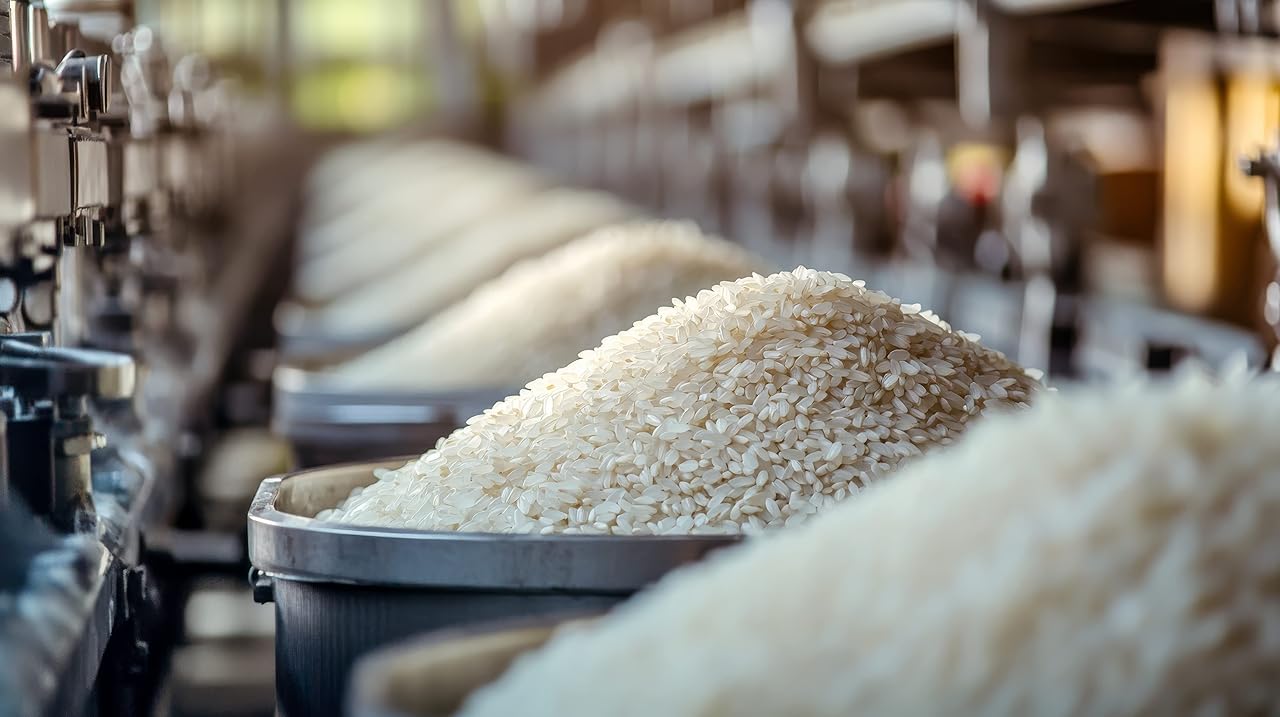
With its fertile lands, advanced milling facilities, and centuries-old tradition of rice cultivation, India has emerged as the world’s largest rice exporter1, accounting for nearly 40% of global rice trade.2 In FY 2024–25, the country exported nearly 20 million tons of rice till March 2025.3
Indian exporters are uniquely positioned to take advantage of this opportunity, as both basmati and non-basmati rice enjoy a trusted reputation worldwide. With the right knowledge of government export schemes, export documentation, and export procedures, entrepreneurs can establish profitable businesses in the rice export sector.
In this detailed blog, we cover India’s rice export industry, popular rice varieties for export, target markets, government bodies and schemes, mandatory documentation, and a step-by-step process to export rice successfully via e-commerce.
Overview and trends of India's rice export industry
India's rice export industry has witnessed significant developments in recent years:
Relaxation of export restrictions:
In September 2024, India lifted the ban on non-basmati white rice exports, replacing it with a Minimum Export Price (MEP) of $490 per ton. This move aimed to stabilize domestic prices and ensure adequate supply for local consumption.4
Increased global demand:
The global rice trade is projected to rise to a record 60.6 million tonnes in 2024–25, with India contributing significantly to this increase due to its larger exports.5
Shift toward branding and packaged rice exports:
The growing demand from international buyers for traceable, high-quality rice has prompted Indian exporters to focus on branding and packaging, improving product appeal and market competitiveness.
Most exported rice products from India
India’s rice exports are diverse, catering to different markets worldwide. Sellers who want to export rice should focus on the most in-demand varieties:
Basmati rice:
Premium quality, long grain, and aromatic, basmati rice is primarily exported to the United States, Middle East, and Europe. In FY 2024–25, India exported approximately 5.9 million tons of basmati rice, accounting for a significant portion of its total rice exports.
Parboiled rice:
This rice variety is partially boiled in the husk, making it more nutritious and less prone to breakage during milling and shipping. In FY 2025-25, India exported around 9 million tons of parboiled rice.6
Raw white (non-basmati) rice:
Affordable and widely consumed, this rice is a bulk commodity in global trade. In FY 2024-25, exports of non-basmati white rice stood at approximately 3 million tons.
Broken rice:
Broken rice is utilized in food processing and animal feed. In FY 2024-25, India exported about 7 million tons of broken rice.7
Top countries to export rice from India
Here are some of the top countries and demand regions sellers should tap into if they are planning to export rice from India:
• United States: The United States has witnessed a rising demand for basmati rice due to health-conscious consumers and South Asian diaspora.
• United Arab Emirates: UAE serves as a major hub for redistribution of Indian rice across Gulf and African nations.
• Saudi Arabia: Saudi Arabia is the largest importer of Indian basmati rice, worth almost $1.5 billion. Indian basmati is preferred here for traditional dishes like biryani and kabsa.8
• United Kingdom: Indian basmati rice is popular among South Asian communities living in the UK and is increasingly featured in mainstream supermarkets due to growing interest in global cuisines.9
Government bodies promoting rice export from India
The Indian government offers various schemes to support rice exporters:
• Agricultural and Processed Food Products Export Development Authority (APEDA): APEDA provides export certifications, market intelligence, and financial assistance.
• Directorate General of Foreign Trade (DGFT): DGFT issues the Importer Exporter Code (IEC) and manages export-import policy.
• Food Safety and Standards Authority of India (FSSAI): FSSAI ensures compliance with international food safety norms.
• Indian Council of Agricultural Research (ICAR): Helps indirectly by improving rice varieties for better yields and global competitiveness.
• Basmati Export Development Foundation (BEDF): Set up by the government to support basmati rice exports, BEDF works alongside APEDA to promote quality standards, assist growers, and enhance global market reach.
Government schemes promoting rice export from India
The Indian government supports exporters through a variety of schemes that help reduce costs and expand markets. Some of the most useful schemes for basmati export and other rice varieties include:
• Remission of Duties and Taxes on Exported Products (RoDTEP): RoDTEP scheme refunds hidden taxes and duties, making exports more competitive.
• Export Promotion Capital Goods Scheme (EPCG): EPCG scheme permits duty-free import of machinery to lower production costs.
• Market Access Initiative (MAI): MAI scheme assists exporters in showcasing products at trade fairs and international exhibitions.
• Transport and Marketing Assistance Scheme (TMA): TMA scheme provides subsidies on freight and promotional expenses for agricultural exports.
• Financial Assistance Scheme (FAS): Run by APEDA, FAS provides financial support to rice exporters for participation in international fairs, promotional activities, and market development.10
Documents required to export rice from India
When preparing to export rice, businesses must ensure proper documentation to comply with trade and customs requirements. Here are some of the key documents:
• Importer Exporter Code (IEC)
• APEDA registration
• Phytosanitary certificate
• Certificate of Origin
• FSSAI license
• Commercial invoice and packing list
• Bill of lading or airway bill11
• APEDA registration
• Phytosanitary certificate
• Certificate of Origin
• FSSAI license
• Commercial invoice and packing list
• Bill of lading or airway bill11
How to export rice from India: Step-by-step process
Exporting rice involves following a structured process. Here’s a step-by-step process to export rice from India:
Step 1: Set up your business
Register your business, get an IEC from DGFT, and obtain APEDA registration.
Step 2: Complete market research and identify buyers
Conduct market research to identify your target market and identify your customer base.
Step 3: Obtain product documentation
Ensure compliance with FSSAI and phytosanitary standards. Customize packaging as per buyer needs.
Step 4: Register on Amazon Global Selling
Create an Amazon seller account on Seller Central to reach customers across 18+ Amazon global marketplaces. All you need to register is ID proof, address proof, and credit or debit card (international transactions enabled).
Step 5: List your products
Once registered, list your products on Amazon global marketplaces. Use the latest tools and expert support to make your listings more visible to customers.
Step 6: Ship and deliver globally
Choose to manage your own logistics through Merchant Fulfilled Network (MFN) or get expert support from Amazon to store, pack, ship, and deliver internationally with Fulfillment by Amazon (FBA). If you are an FBA seller and opt for Amazon SEND, partnered carriers will handle customs clearance for you.
Step 7: Receive payments and grow your business
Receive payment in INR directly in your bank account and use tools like Brand Registry and Amazon ads to grow your business.12
Conclusion
India’s rice export industry offers a thriving opportunity for businesses looking to enter global markets. With strong demand for both basmati rice export and non-basmati varieties, robust government support, and well-established infrastructure, exporters can achieve long-term growth. By staying updated on regulations, maintaining quality standards, and following the right process, Indian businesses can successfully export rice worldwide.
For exporters looking to go global with ease, ecommerce export programs like Amazon Global Selling can help you unlock new markets and simplify complex export logistics.
For exporters looking to go global with ease, ecommerce export programs like Amazon Global Selling can help you unlock new markets and simplify complex export logistics.
Amazon Global Selling: Easy e-commerce exports and hassle-free shipping
If you are a business owner and you want to sell your products to the world, Amazon Global Selling enables you to list and sell ‘Made in India’ products on 18 Amazon global marketplaces. As an e-commerce export program, Amazon Global Selling provides support and guidance at every step of your export journey, connecting you to Amazon’s Service Provider Network for tailored compliance, payments, and logistics support.
Registered sellers can choose to ship their products by themselves through Merchant Fulfilled Network (MFN) or they can opt for Fulfillment by Amazon (FBA) and outsource order fulfillment to Amazon including packing, storage, delivery, and returns. Amazon Global Selling simplifies the process of international shipping to the world, helping businesses navigate customs and reach a vast audience.
Registered sellers can choose to ship their products by themselves through Merchant Fulfilled Network (MFN) or they can opt for Fulfillment by Amazon (FBA) and outsource order fulfillment to Amazon including packing, storage, delivery, and returns. Amazon Global Selling simplifies the process of international shipping to the world, helping businesses navigate customs and reach a vast audience.
Frequently Asked Questions
1. Who is the largest exporter of rice?
India is the largest exporter of rice globally, with APEDA playing a key role in promoting and regulating exports.
2. Which variety of rice is exported from India?
Both basmati and non-basmati rice varieties are exported, including parboiled, raw white, and broken rice.
3. Which rice is mostly exported from India?
Basmati rice dominates premium markets, while non-basmati rice (parboiled and raw white) is exported in bulk to Africa and Asia.
4. Which rice is best for export from India?
Basmati rice is considered the best for export due to its aroma, grain length, and high international demand.
Published on October 13, 2025.
Sources:
1. https://www.dgciskol.gov.in/writereaddata/Downloads/20240808163758A%20brief%20report%20on%20Export%20of%20Rice%20by%20India.pdf
2. https://www.credlix.com/blogs/rice-exports-from-india-a-global-staple-driving-trade-and-economy
3. https://ibef.org/news/india-exported-19-86-million-tonnes-of-rice-till-march-25-2025-of-fy25-government-tells-rajya-sabha
4. https://www.ifpri.org/blog/india-lifts-export-restrictions-on-rice/?utm
5. https://www.farmprogress.com/rice/india-to-top-world-in-rice-production?utm
6. https://www.spglobal.com/commodity-insights/en/news-research/latest-news/agriculture/033125-west-african-parboiled-rice-prices-fall-25-after-export-duty-removal?utm
7. https://ibef.org/news/india-exported-19-86-million-tonnes-of-rice-till-march-25-2025-of-fy25-government-tells-rajya-sabha
8. https://www.cybex.in/blogs/indian-rice-exports-guide-for-exporters-how-it-is-building-its-dominance
9. https://www.newindianexpress.com/nation/2025/Jul/25/indian-basmati-exports-to-uk-expected-to-touch-25-lakh-metric-tonnes?utm
10. https://www.myscheme.gov.in/schemes/financial-assistance-scheme
11. https://dataverseeinc.in/basmati-rice-export-from-india/.
12. https://falconfreight.com/rice-export-procedure-in-india/



Sell across the world with Amazon Global Selling
Ready to start exporting from India?
Want to learn about Amazon Global Selling?

Disclaimer: Whilst Amazon Seller Services Private Limited ("Amazon") has used reasonable endeavours in compiling the information provided, Amazon provides no assurance as to its accuracy, completeness or usefulness or that such information is error-free. In certain cases, the blog is provided by a third-party seller and is made available on an "as-is" basis. Amazon hereby disclaims any and all liability and assumes no responsibility whatsoever for consequences resulting from use of such information. Information provided may be changed or updated at any time, without any prior notice. You agree to use the information, at your own risk and expressly waive any and all claims, rights of action and/or remedies (under law or otherwise) that you may have against Amazon arising out of or in connection with the use of such information. Any copying, redistribution or republication of the information, or any portion thereof, without prior written consent of Amazon is strictly prohibited.


© 2024 Amazon.com, Inc. or its affiliates. All rights reserved
